You have three shows on the calendar. The first gives you a 10×20 inline space, the second offers a 20×20 island, and the third is still undecided. You want the brand to look familiar at every event, but you do not want to pay for a completely new exhibit each time. Should you rent or buy?
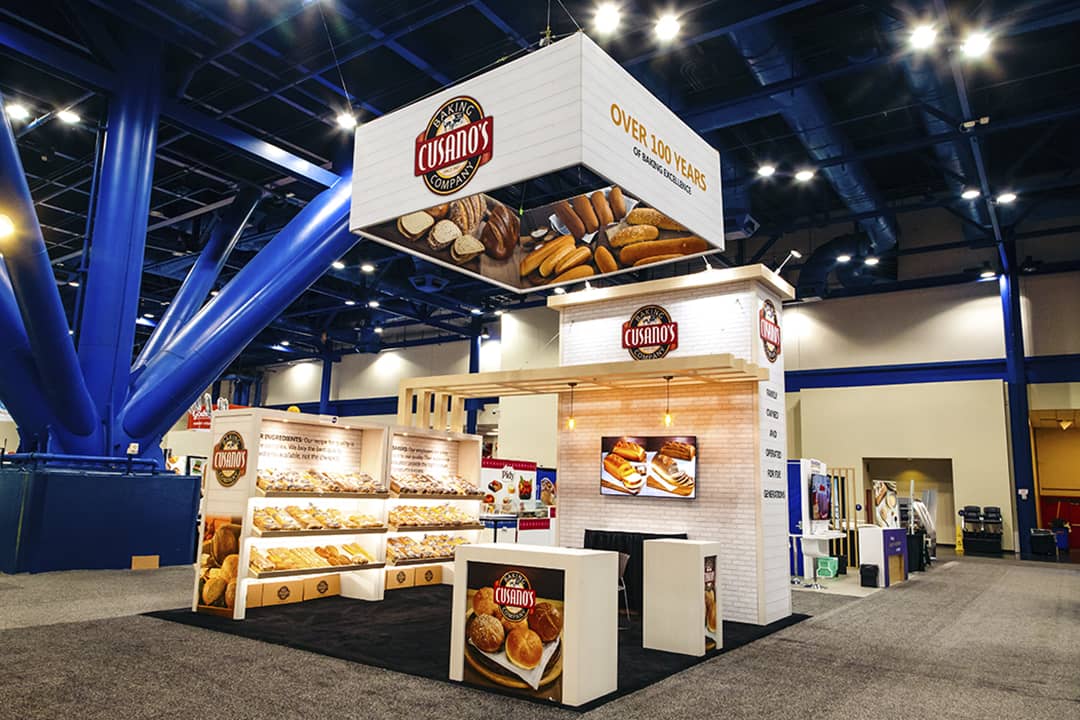
Table of Contents
At Exhibit Craft, we hear that question from exhibitors planning events in Miami, Orlando, and across the country. Modular trade show booths can work with either approach. Their components can be arranged for different footprints, refreshed with new graphics, and adapted as your show program changes. The choice comes down to how often you exhibit, how much control you need, and what the exhibit will cost over its full working life.
Here is how we help teams make that decision.
Talk with Exhibit Craft about your next boothQuick answer: Is renting or buying better?
Rent a modular booth if your show schedule is uncertain, you are testing a new event or market, or you want a fresh design without owning the structure. Buy a modular booth if you exhibit regularly, have stable branding and repeatable needs, and expect to reuse its components often enough to justify the initial investment.
The best answer can also be a mix: own signature elements and rent additional structures for larger events. Before committing, compare quotes for the same footprints, features, and service scope. A low initial price can be misleading when graphics, freight, show services, installation, storage, and repairs appear elsewhere.
| Renting | Buying | |
|---|---|---|
| Upfront investment | Usually lower for the structure; customization and services still cost money | Higher initial cost for design and fabrication |
| Creative changes | Easier to test new layouts and scale between events, subject to inventory and lead time | You control owned components, but major structural changes may require added fabrication |
| Repeat use | Rental charges recur at each show | Reuse can spread the purchase cost across multiple events |
| Storage and upkeep | Ask what the rental agreement includes | Owner remains responsible for care, repairs, and storage, even when a partner manages them |
| Best fit | Changing schedule, new markets, occasional shows | Established, recurring exhibit program |
These are planning tendencies, not fixed promises. Ask for a proposal that spells out what your team actually receives.
Modular trade show booths for Miami and Orlando events
A local exhibit partner can help coordinate the details that change from venue to venue. Exhibit Craft is headquartered in Miami and has a satellite warehouse and rental facility in the Orlando area. If you are comparing modular trade show booths in Miami or modular trade show booths in Orlando , bring your event dates, booth footprints, and venue requirements to the first conversation.
We can discuss rental and purchase options alongside graphics, shipping, installation, and show support. Our Florida trade show displays page offers a broader view of these services.
What makes a booth modular?
A modular exhibit uses compatible pieces such as frames, walls, counters, towers, graphics, and display areas that can be arranged in more than one configuration. The idea is to keep the parts that work and adapt the layout to the next event.
That does not mean the booth has to look generic. Materials, lighting, product displays, large-format graphics, video, and architectural details can give a modular system a distinct personality. A booth designed for sampling will need a different visitor flow than one designed around private meetings.
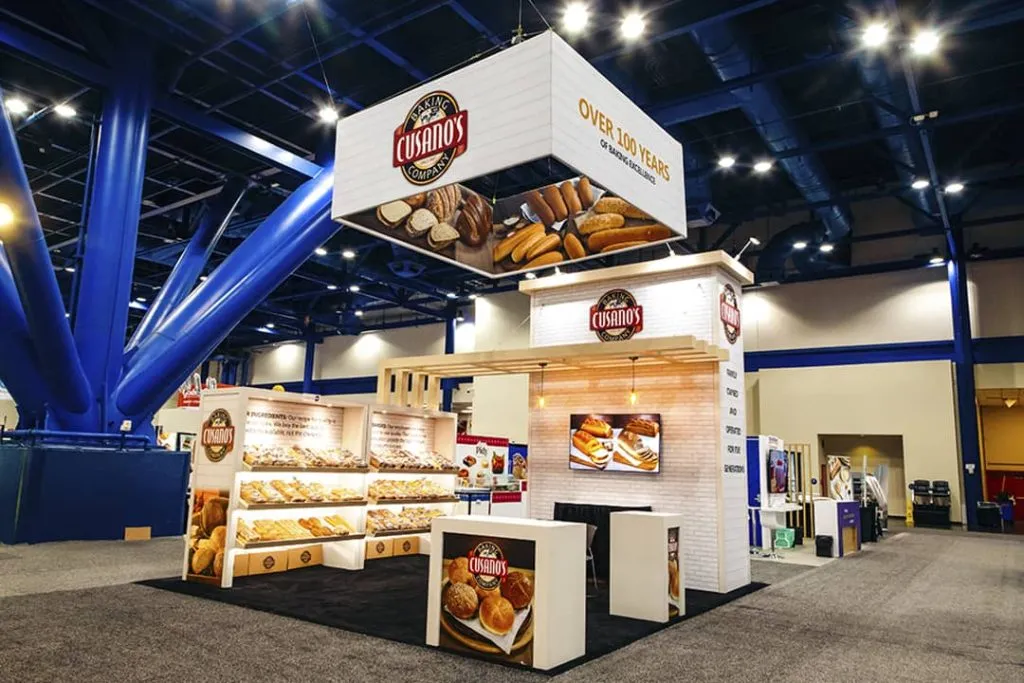
For an example of flexibility in practice, see our Cusano’s Bakery modular exhibit . We developed a system that can transition between a 20×20 island and a 10×20 configuration while preserving the brand story and space for product sampling. The lesson is to design for the whole show calendar , not only the first floor plan.
When renting a modular trade show booth makes sense
Your show calendar may change
Perhaps you are trying a new industry event or waiting to see whether a regional show earns a place in next year’s budget. Renting gives your team room to learn before buying exhibit assets. If the show underperforms, you can rethink the layout, footprint, or event selection.
This also helps when booth sizes vary widely. You might need a small inline display for a conference this quarter and an island exhibit for a product launch later.
Ask how a custom trade show booth rental can be configured for both rather than assuming the same structure fits every venue.
You need to test a new presentation
A different audience may call for more meeting space, a demonstration counter, or larger screens. A rental lets you experiment with the physical layout. You can invest in graphics and experiences that support the current goal, then review what visitors actually used.
Consider a software company attending its first national trade show. Its team expects live demos but does not yet know whether visitors will prefer scheduled meetings or quick walk-up presentations. A rental with flexible counters and a demo zone gives it a way to test that assumption. This is an illustrative planning scenario, not a client result.
You want help handling the details
Renting a structure does not automatically make every operational expense disappear. Clarify who is responsible for design, graphics, freight, advance warehouse deliveries, installation, dismantling, show services, and on-site fixes.
Our exhibit services cover design, production, logistics, and management. With headquarters in Miami and a satellite warehouse and rental facility near Orlando, we can help exhibitors planning shows in Florida and beyond.
See our Orlando trade show booth rentals and Miami trade show display rental pages for location-specific options. A proposal can be shaped around the support your team needs.
When buying a modular booth makes sense
You exhibit often and can reuse the system
Frequent exhibitors should look past the purchase price and estimate their cost per show. If the same components appear at several events each year, ownership may become attractive. You can also plan a kit that scales between common footprints instead of commissioning separate exhibits.
Say a manufacturer attends six shows annually, most in either 10×20 or 20×20 spaces. It should compare the cost of renting appropriate configurations for those six events with the purchase price plus annual storage, freight, labor, maintenance, and graphic refreshes. The calculation depends on actual proposals, not a universal number of shows.
Your brand presentation is stable
If you know which products need display space and how your team hosts visitors, a purchased system can turn those requirements into a repeatable environment. You can keep the core architectural identity while replacing campaign graphics, product messaging, and technology as needed.
Our Fincantieri Marine Group case study shows how a modular island design can adapt between two large footprints while maintaining a clear brand presence. It is an example of design flexibility, not evidence that buying will always cost less than renting.
You want direct control of exhibit assets
Ownership can make sense when you need access to specific structures for a packed schedule or have custom elements that are central to the experience. But ownership also brings decisions about cleaning, repairs, inventory, storage, and transport. An exhibit partner can manage much of this work, but those services still belong in the budget.
How to compare the full cost
Ask your exhibit partner to price a realistic twelve- or twenty-four-month calendar. Use the same show dates and requirements in both options. Your comparison should include:
- Design and fabrication: What is built or customized, and who owns the components and artwork?
- Graphics and updates: Which graphics can be reused, and what will replacements cost?
- Shipping and material handling: How many crates travel, and what does each event require?
- Installation and dismantling: How many crew hours are anticipated for each configuration?
- Storage and maintenance: Who stores, inspects, cleans, repairs, and inventories the booth?
- Show services: Budget separately for venue requirements such as electrical, internet, and material handling.
- Change requests: What happens if you add a show, switch footprints, or need a product launch refresh?
For a purchased booth, divide the projected total cost by the number of events you reasonably expect to attend. For a rental, add the charges for each event, including any design and graphic work that carries over. Then compare the two totals and their cost per show. Do not assume identical graphics, labor, or logistics are included in each quote.
Our article on how modular trade show displays cut costs across multiple shows explores the operating costs that are easy to miss when you only compare the first invoice.
The middle option: Own some elements and rent the rest
The decision does not have to be all or nothing. A brand might own custom product fixtures, branded counters, or graphics while renting structural walls and larger components for selected events. Another team may own a smaller core exhibit and rent additions when it books a larger island space.
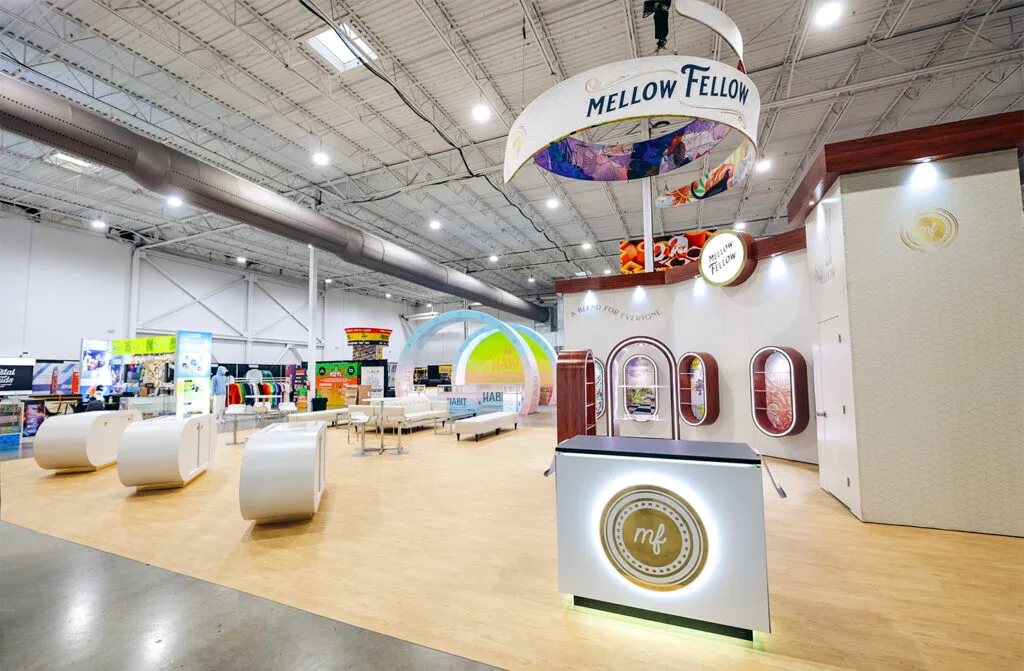
Our Mellow Fellow exhibit program paired a flagship 30×50 island exhibit with a modular 20×20 configuration for a multi-show schedule. That project illustrates how an exhibit program can use different formats to fit different event goals. Its specific commercial arrangement should not be assumed from the design.
A hybrid plan needs careful coordination. Check that owned and rental pieces work together visually and technically. Confirm who handles packing, inventory, graphics, and the transition between shows.
Five questions to ask before you decide
1. How many shows are confirmed?
Separate booked events from hopeful additions. A purchase decision based on ten potential shows looks different if only three are approved.
2. Which footprints will you actually use?
List each show’s size and booth type. A 10×20 inline layout and a 20×20 island have different sightlines, entrances, and visitor flow. Design around your likely combinations.
3. What must stay consistent?
Identify the pieces that make the booth recognizable: a product display, overhead sign, meeting area, demo experience, or signature material. Those priorities guide what to own, rent, and refresh.
4. Who will manage the booth between events?
Even a reusable exhibit needs attention. Ask who checks for damage, updates graphics, books freight, and prepares the next configuration. Our “ About Exhibit Craft page ” explains the asset management and show support we provide.
5. What would change your plans?
A new product, a larger show, a changed budget, or a different target audience can alter the ideal configuration. Plan for likely changes before finalizing the system.
Build around your goals, then choose how to pay for it
The strongest modular trade show booths begin with a clear brief: which shows matter, whom you need to meet, and what visitors should do in the space. From there, renting, buying, or combining the two becomes a practical financial and operational decision.
At Exhibit Craft, we design and build exhibits for rental and purchase and support the work that gets them onto the show floor. Bring us your event calendar, possible booth sizes, and presentation goals. We can help you compare configurations and the services each one requires.
Submit your exhibit RFP to Exhibit CraftTell us what your next show needs to accomplish.
Planning your next show?
Published September 29, 2026 by the Exhibit Craft team.