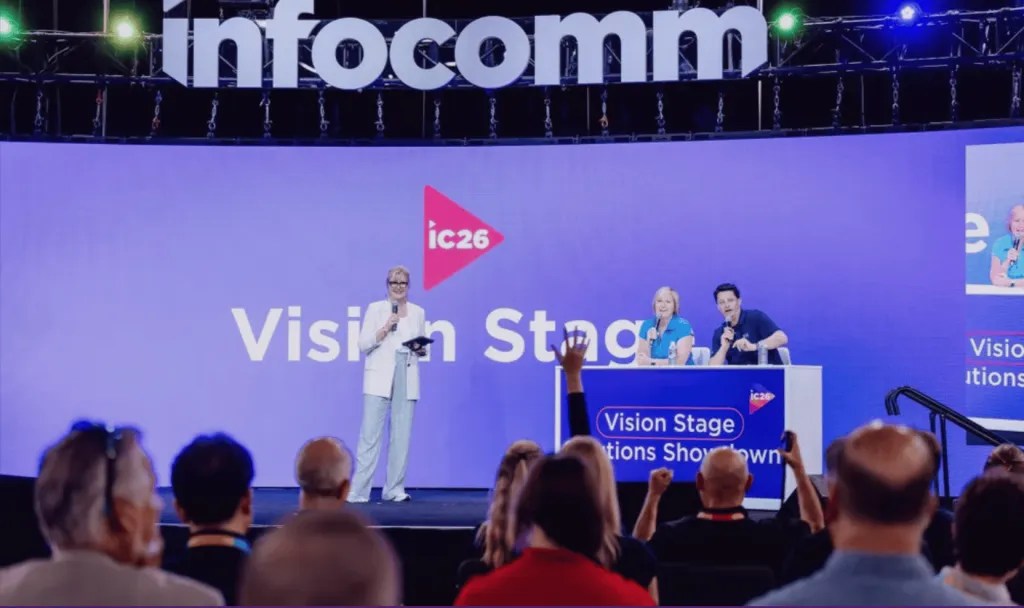
InfoComm 2027 is an opportunity to put your technology in front of people who want to see it work. The exhibit floor is scheduled for June 16–18 at the Orange County Convention Center in Orlando, with education taking place June 12–18.
If you are exhibiting, one early decision will shape nearly everything else: Should you rent your booth or purchase a custom exhibit?
The answer depends on what you need visitors to experience , how often you exhibit, and how much change you expect in your product lineup. A rental is not necessarily generic. A purchased exhibit is not automatically the better investment.
Table of Contents
Planning a booth for Orlando?
At Exhibit Craft, we design and build exhibits for both rental and purchase, then help clients manage the details that make a show work.
Request an InfoComm 2027 exhibit proposalWhat Exhibitors Should Know About InfoComm 2027
InfoComm is produced by AVIXA, the Audiovisual and Integrated Experience Association. It brings together AV manufacturers, integrators, dealers, and end users. The organizer says the 2026 edition had 807 exhibiting companies and 28,132 verified attendees from 94 countries. Those are 2026 results , not projections or promised attendance for 2027.
Dates, venue, and show-floor hours
The 2027 event runs June 12–18 at the Orange County Convention Center, West Building, 9800 International Drive, Orlando, Florida 32819 . Education is scheduled throughout June 12–18, while the exhibit floor opens Wednesday, June 16, through Friday, June 18 . The published exhibit hours are 9 a.m. to 5 p.m. Wednesday and Thursday and 9 a.m. to 4 p.m. Friday . The organizer says the detailed 2027 schedule is still coming.
Those three exhibit days should shape the booth plan. A 20-minute product demonstration, for example, needs enough space for visitors who arrive while the previous group is still watching. If your team is booking meetings, consider how the demo queue, meeting table, and aisle traffic will interact at busy times. Friday’s shorter hours also make it useful to decide in advance which prospects need an appointment.
Who will be there, and what might they want to see?
The organizer lists audio, broadcast AV, command and control, conferencing and collaboration, digital signage, and lighting and staging among the technology categories on the floor. Education formats include workshops, tours, paid sessions, CTS testing, manufacturer training, and free show-floor sessions. An exhibitor may therefore meet someone comparing hardware at one moment and someone exploring a complete integration at the next. That range favors clear signs, short first demonstrations, and a path to a deeper technical conversation.
Another new consideration for 2027: RESIDE and Lightapalooza are being brought together with InfoComm in Orlando . The organizer describes RESIDE as focused on residential systems and Lightapalooza as focused on lighting designers and integrators, alongside InfoComm’s commercial AV audience. If your products cross those markets, consider whether one booth story can speak to several visitor types without becoming vague. That might affect the number of demo stations, the graphics you prepare, or whether you reserve space for different conversations.
The Short Answer: Rent for Flexibility, Purchase for a Repeatable Program
Renting often makes sense if InfoComm is your first major show , your booth footprint may change, or you want a polished exhibit without taking ownership of the structure. Buying may make sense if you have a dependable show calendar, consistent brand requirements, and a layout you can reuse or reconfigure over several events.
There is room between those choices. You might rent the main structure and invest in reusable graphics or demonstration components. You might purchase a modular exhibit and rent larger elements for selected shows. Start with your goals, then choose the ownership model.
For InfoComm 2027, we recommend asking one practical question: What must happen inside the booth for this show to count as a success? A display manufacturer may need several viewing distances. A conferencing company may need a quiet demonstration area. A software provider may need short conversations at multiple stations. Those requirements should guide the design before anyone selects a wall system or finishes a rendering.
What Is the Difference Between a Booth Rental and a Purchased Exhibit?
Rental exhibits can still feel custom
With a rental, you pay to use exhibit components for an agreed period. Your design can incorporate branded graphics, display areas, lighting, counters, meeting spaces, and technology suited to your presentation.
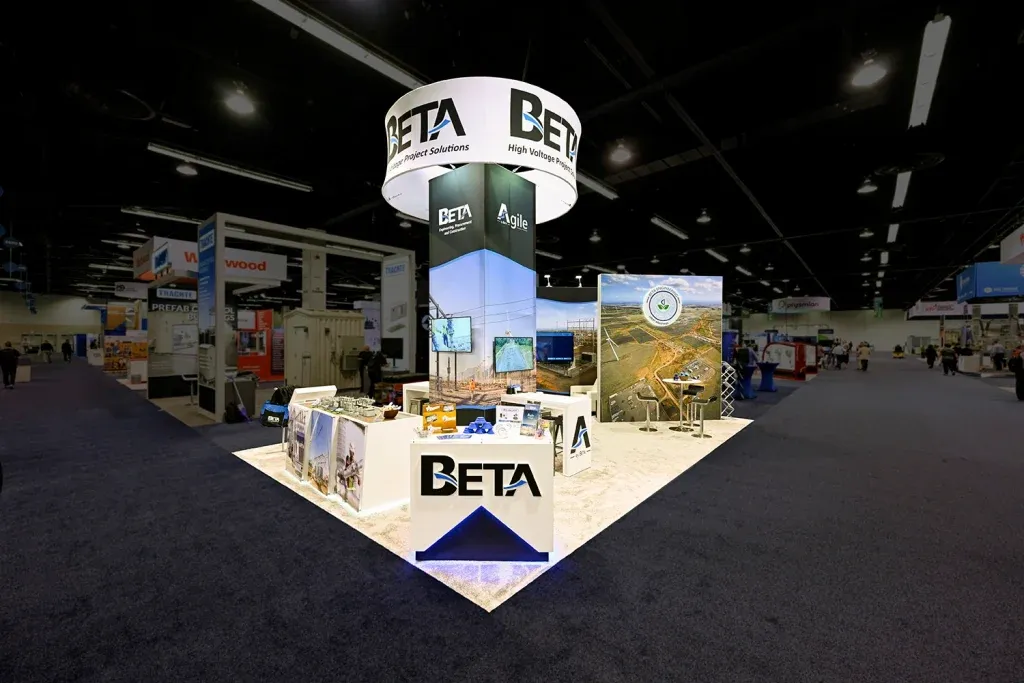
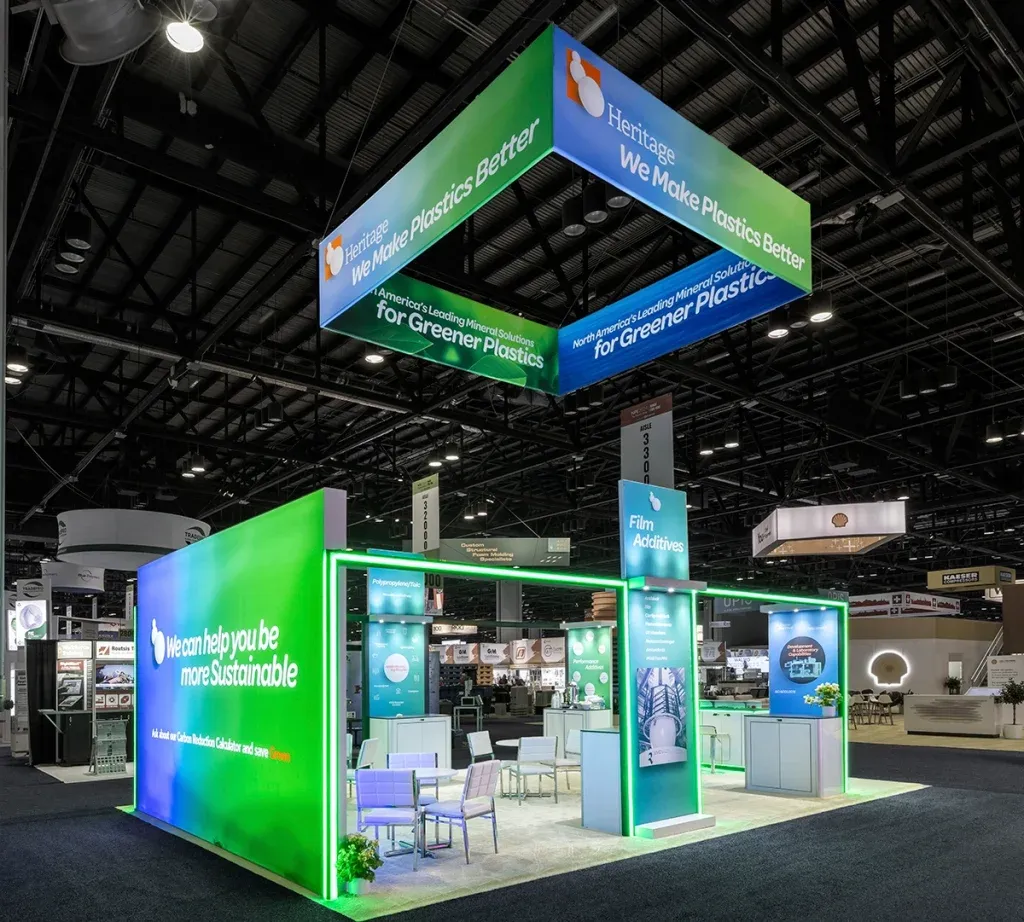
Our custom trade show booth rentals can use modular and portable displays, interactive kiosks, and digital displays. A rental does not have to look like an off-the-shelf package.
Because you do not own the principal structure, you can reconsider its size and layout before the next event. That is useful when your marketing team is testing formats or the next show has a different audience. Rental terms, custom graphics, technology, and service costs should be reviewed in the proposal rather than assumed.
Purchased exhibits become part of your show program
When you purchase an exhibit, you own an asset that can travel to future shows. It may be a fully custom environment or a modular design with components that shift between booth sizes. Ownership gives you a consistent foundation, but it also means planning for storage, maintenance, repairs, updates, and transportation.
Compare the Total Budget, Not Just the Initial Quote
A rental quote and a purchase quote answer different financial questions. Renting generally places more of the structure cost within a particular event budget. Purchasing brings a larger initial investment, which may be spread across multiple shows if the exhibit remains useful.
For a fair comparison, request a line-by-line estimate covering:
- Design and fabrication: What is built specifically for your brand, and what is rented?
- Graphics and content: Which printed panels, video files, or branded pieces can be reused?
- Technology: Who supplies the screens, mounts, computers, sound equipment, and connections?
- Shipping and material handling: What will it cost to get the exhibit to Orlando and onto the floor?
- Installation and dismantling: Who coordinates labor, supervision, packing, and removal?
- After the show: Where do owned items go, and what will storage, repair, or return shipping cost?
Then compare the options over your likely show calendar. A company attending one large event may value a rental’s smaller commitment. A company attending several compatible events may find that a reconfigurable purchased exhibit becomes more useful over time. There is no universal break-even number: show sizes, freight, labor, refreshes, and the useful life of the design all affect the calculation.
How Often Will You Use the Exhibit Again?
One major show or an uncertain schedule
Suppose a growing AV company plans to launch a new product at InfoComm 2027 but has not committed to other shows. It wants a large screen, two short demo stations, and a place for scheduled conversations. Renting a tailored exhibit lets the team test how visitors use that space before deciding what to build for a longer program.
A recurring calendar with changing footprints
If you exhibit every quarter, ownership deserves a closer look. The strongest purchase plan is usually more than a beautiful booth for one floor plan. It gives you components that can work in other configurations.
Our Mellow Fellow multi-show exhibit case study shows how we developed a flagship 30-by-50-foot island exhibit and a modular 20-by-20-foot configuration, with logistics, storage, installation, and ongoing refreshes. Mellow Fellow is not an InfoComm exhibitor in this example; its program illustrates how one brand can maintain a recognizable presence across different footprints.
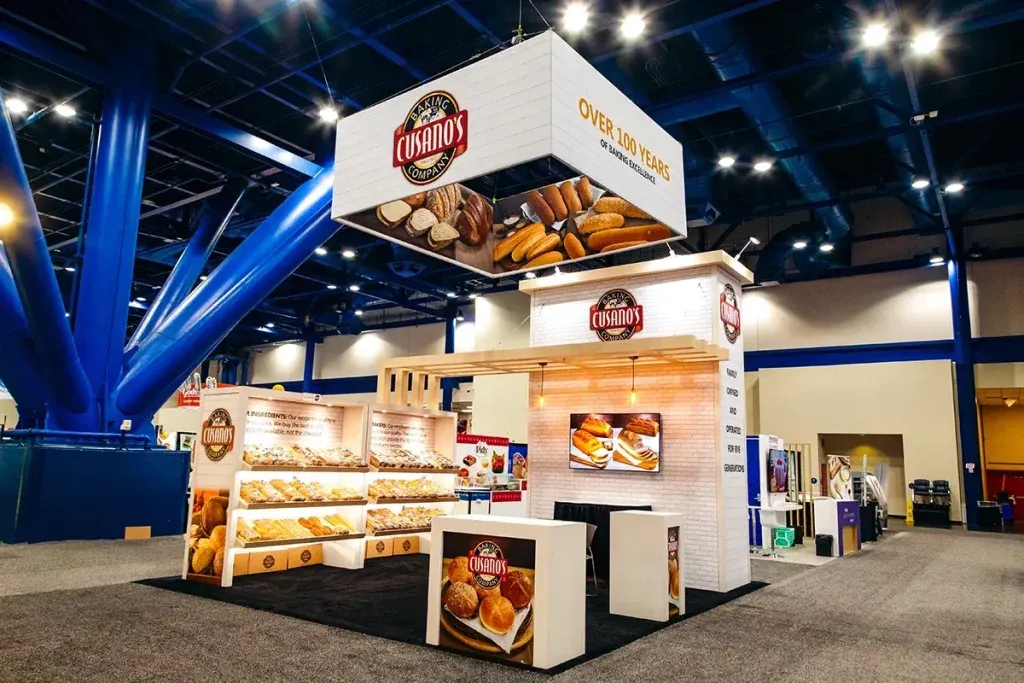
For another example of adaptable design, our Cusano’s Bakery modular exhibit case study describes a system that can move between 20-by-20-foot and 10-by-20-foot configurations. Its sampling goals differ from an AV demo, but the underlying lesson is useful: plan for future booth sizes while keeping the brand experience coherent.
Put the Demonstration at the Center of the Design
InfoComm brings together professional AV categories including audio, broadcast AV, conferencing, digital signage, and lighting. Visitors are there to evaluate technology in action. A booth that looks impressive from the aisle still has to help people understand the product once they step inside.
For screens and digital signage
Think about viewing distance, glare, sightlines, content pacing, and the amount of space a small crowd will occupy. A wall of displays can attract attention, but visitors should quickly understand what each screen is proving. Leave enough room for a salesperson to stand beside a visitor without blocking the demonstration.
For audio and conferencing
Consider how show-floor noise will affect the experience. If someone needs to hear speech clarity or compare sound, decide whether an open demo, enclosed area, or scheduled presentation is appropriate. Review event rules and technical requirements before committing to a sound plan. A rushed audio setup can undermine even strong equipment.
For software and integrated systems
Build around the user’s task. A short guided demo at a kiosk might work better than a long presentation looping on a large wall. Provide a place to move from the first explanation to a deeper conversation, especially if buyers have questions about integration, deployment, or support.
Both rental and purchased exhibits can support these layouts. The key difference is whether you need to preserve the same architecture for future demonstrations or expect to redesign as your technology and audience change.
Flexibility Is More Than the Ability to Change Graphics
Before choosing a rental or purchase for InfoComm 2027, review four kinds of change:
- Product change: Will you launch a new system next year that needs different power, mounting, or demo space?
- Footprint change: Is your current booth size typical of the rest of your show calendar?
- Audience change: Do your other events involve the same buyers and the same sales conversations?
- Brand change: Is a visual refresh or repositioning likely during the exhibit’s useful life?
If much is unsettled, a rental or hybrid plan can preserve options. If the core experience is stable, a modular purchase can provide continuity while leaving room for updates. Neither option removes the need for technical planning and a realistic production schedule.
Why Orlando Logistics Belong in the Decision
For an Orlando show, the exhibit’s route to the venue matters alongside its appearance. Freight timing, show orders, installation, and dismantling all affect the budget and the team’s workload. For a display-heavy booth, you also need to think through equipment delivery, power, connections, testing, and who responds if something needs attention on site.
Exhibit Craft has a Miami headquarters and an Orlando satellite warehouse and rental facility. Our team offers show-order administration, installation labor, on-site supervision, shipping, storage, and exhibit management.
Our Orlando trade show booth rentals page covers local rental possibilities, while our custom trade show booths in Orlando page provides more on tailored builds. Having support for both models helps us work backward from the exhibitor’s actual needs.
A Five-Question Decision Checklist for InfoComm 2027
- What is the primary outcome? Product demos, qualified meetings, distributor conversations, and brand awareness call for different layouts.
- How many shows will use this exhibit? List confirmed events and likely footprints rather than assuming future reuse.
- What must be unique? Identify the components that truly need custom fabrication and those that can come from a rental inventory.
- What might change? Product specifications, branding, and sales priorities can shift before the next show.
- Who will manage the exhibit? Account for design, show forms, freight, labor, storage, repairs, and updates.
Build the Booth Around the Next Conversation
The best choice for InfoComm 2027 is the exhibit that helps the right visitor stop, understand your technology, and take a useful next step. A rental can deliver a highly branded, functional environment for a single event or an evolving program. A purchased exhibit can become a consistent, reconfigurable platform for years of shows. The right answer may combine elements of both.
At Exhibit Craft, we bring more than 30 years of exhibit experience to design, fabrication, show services, and logistics. Tell us about your booth size, demonstration needs, budget, and upcoming events. We can help you compare rental, purchase, and hybrid approaches with a plan that fits the way your team exhibits.
Contact Exhibit Craft TodayPlanning your next show?
Published September 29, 2026 by the Exhibit Craft team.